Oritoori - Ishigaki City Official Tourism Information Website
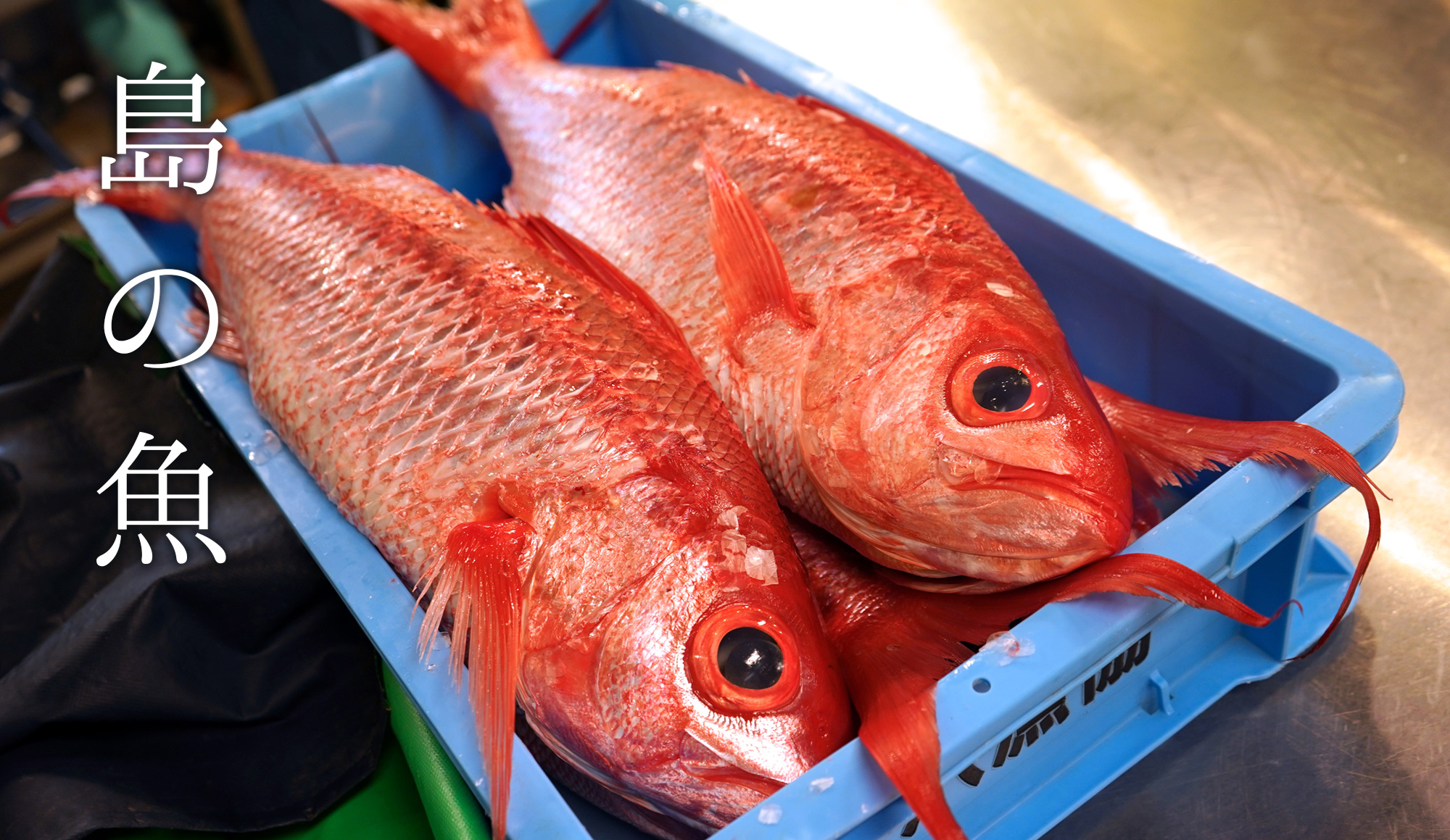
In Ishigaki Island, fresh fish dishes such as sashimi are a common sight on the dinner table. The nearby waters are rich in marine resources, with tuna and bonito being caught, as well as other fish considered to be among the three most prized fish in Okinawa, such as the red grouper (Akajinmiibai), red snapper (Akamachi), and white-spotted wrasse (Makubu). There are more than 20 fresh fish shops scattered around the fishing port of Ishigaki Island.
The "Michitake Maru," operated by a fisherman who began operations in the early 1800s, was a pioneer in Ishigaki Island, being the first tuna longline fishing boat, squid fishing, and fish-attracting light fishing vessel.
Fish shop "Michitake Maru"
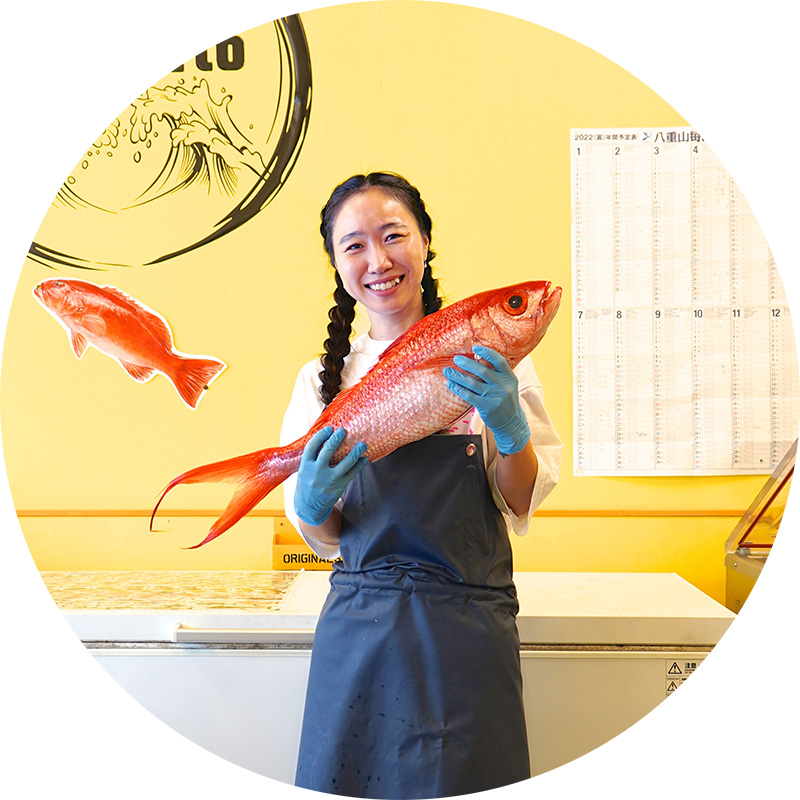
"Michitakemaru" has also had a fish shop since around 1955, and is now run by Sayaka Nakajima, who processes, manages, and sells the fish landed at "Michitakemaru" and the fish purchased at auction.
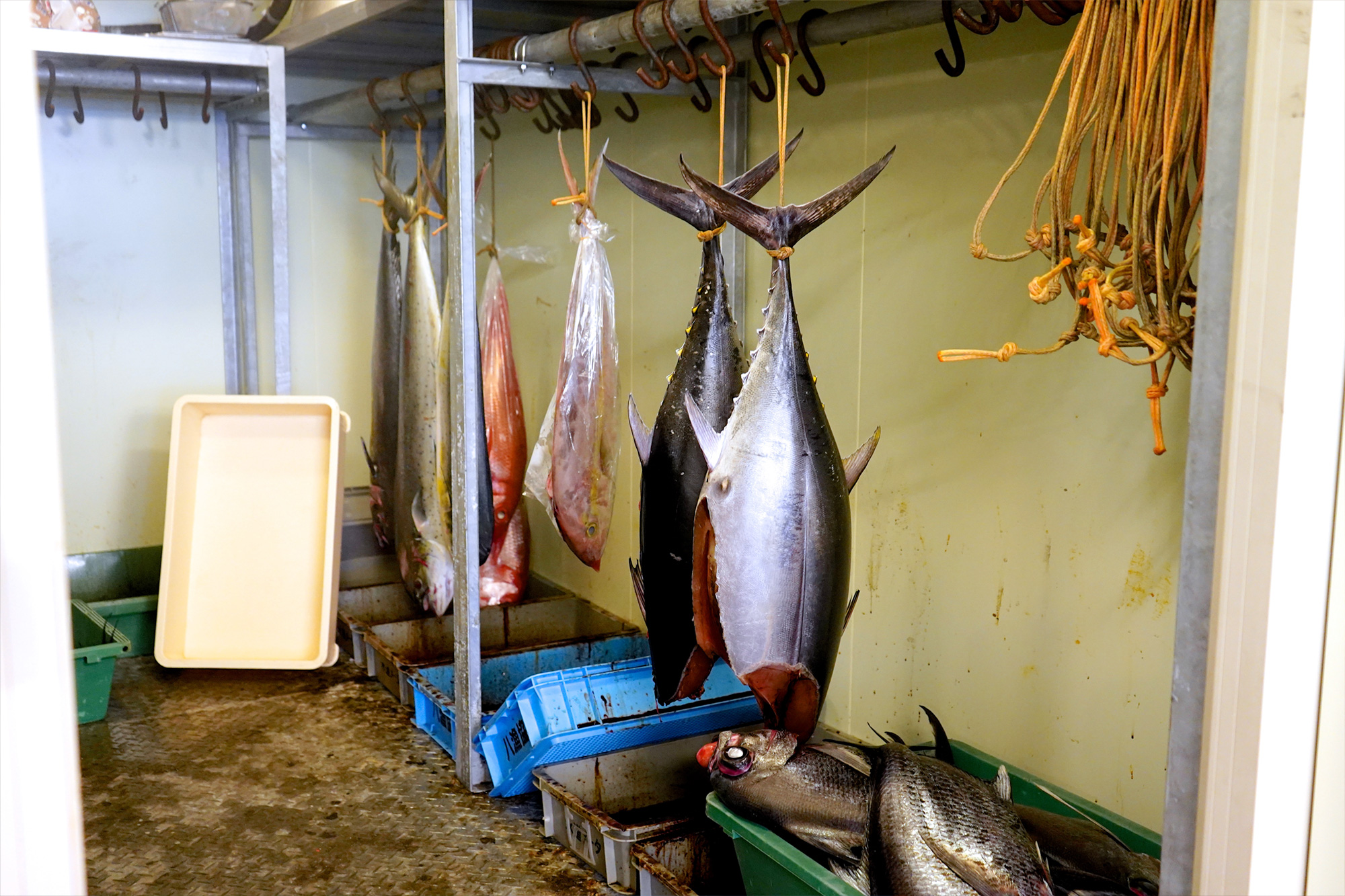
Hanging the fish upside down prevents damage to the flesh and also helps to drain the blood.
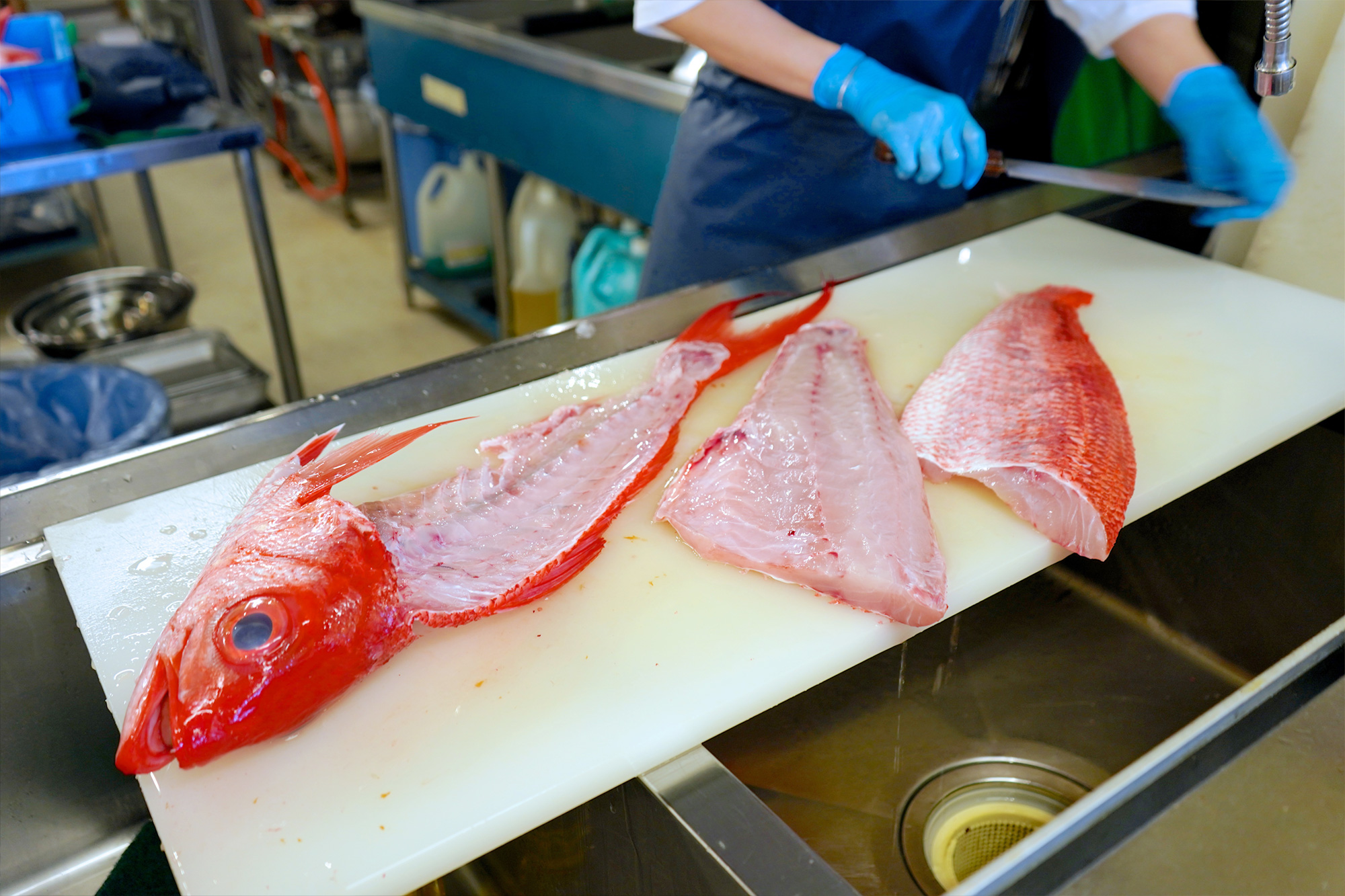
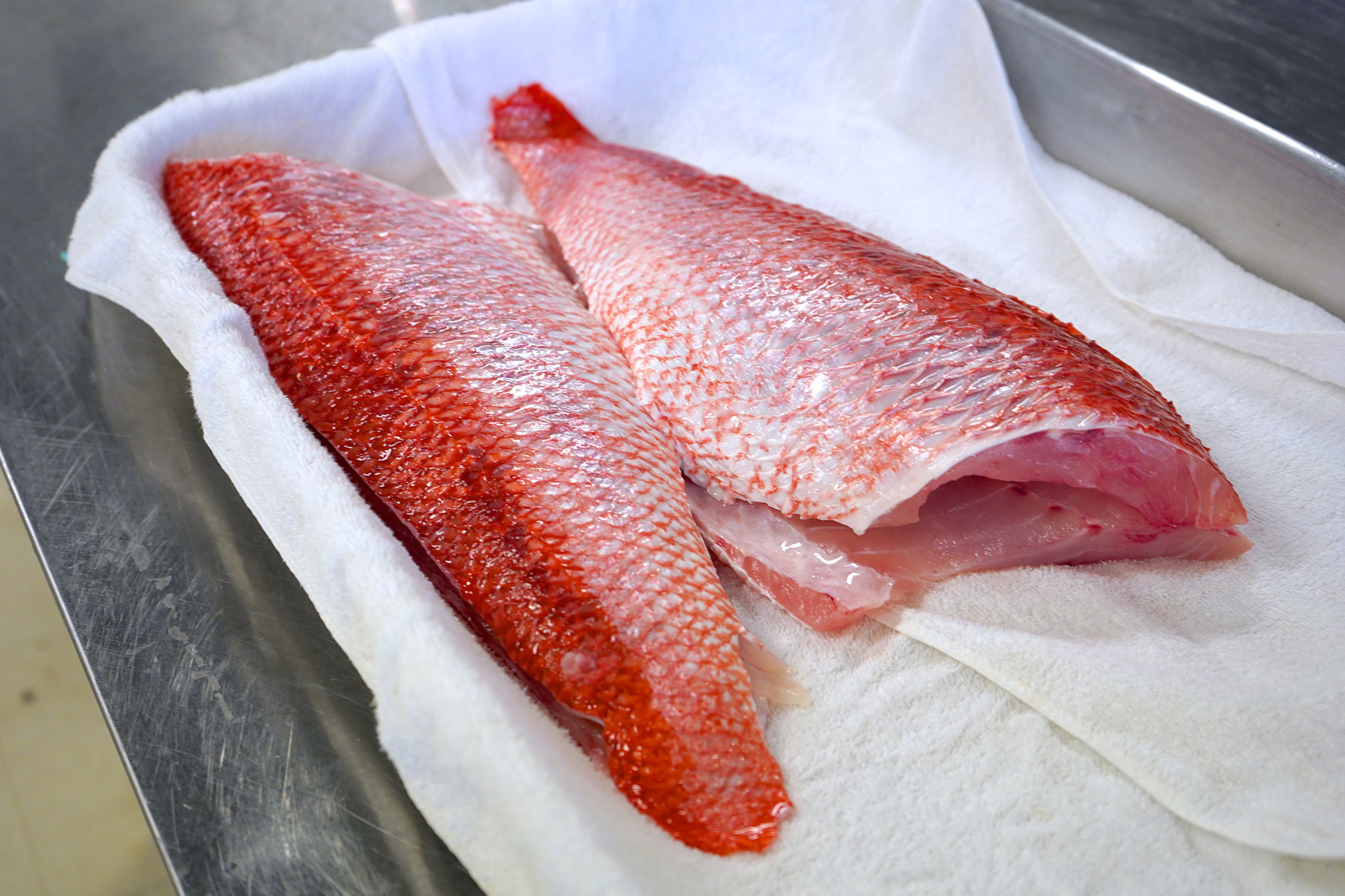
Kiyoka preparing a red snapper (hamadai).
"Since I was little, I grew up seeing my father go out to sea to fish, and it was normal for fish to be a part of everyday life," says Kiyoka. After marrying her husband, whom she met on Ishigaki Island, and moving to his hometown in Kanagawa Prefecture, she continued to work as a middleman, supplying fish caught by the "Michitake Maru" to stores on the mainland.
My grandmother, Take-san, asked me, "I'm thinking of retiring from the fish shop, would you like to take it over, Kiyoka?" Even though I was in Kanagawa, the fish I was handling were from "Michitake Maru," and I reaffirmed that my base was still in Ishigaki Island, so I decided to return to Ishigaki Island with my husband.
To take a life
Just as Kiyoka returned to Ishigaki Island and was getting used to working at the fish shop, the coronavirus pandemic began to spread.
The "Michitake Maru" can catch up to 5 tons of fish in a single fishing trip, but the COVID-19 pandemic has drastically reduced the amount of fish that can be shipped, resulting in large quantities of fish being discarded.
Kiyoka came to strongly believe that the efforts and feelings of the fishermen who risk their lives to go out to sea, as well as the lives of the fish they catch, should not be wasted, and so she began developing processed fish products.
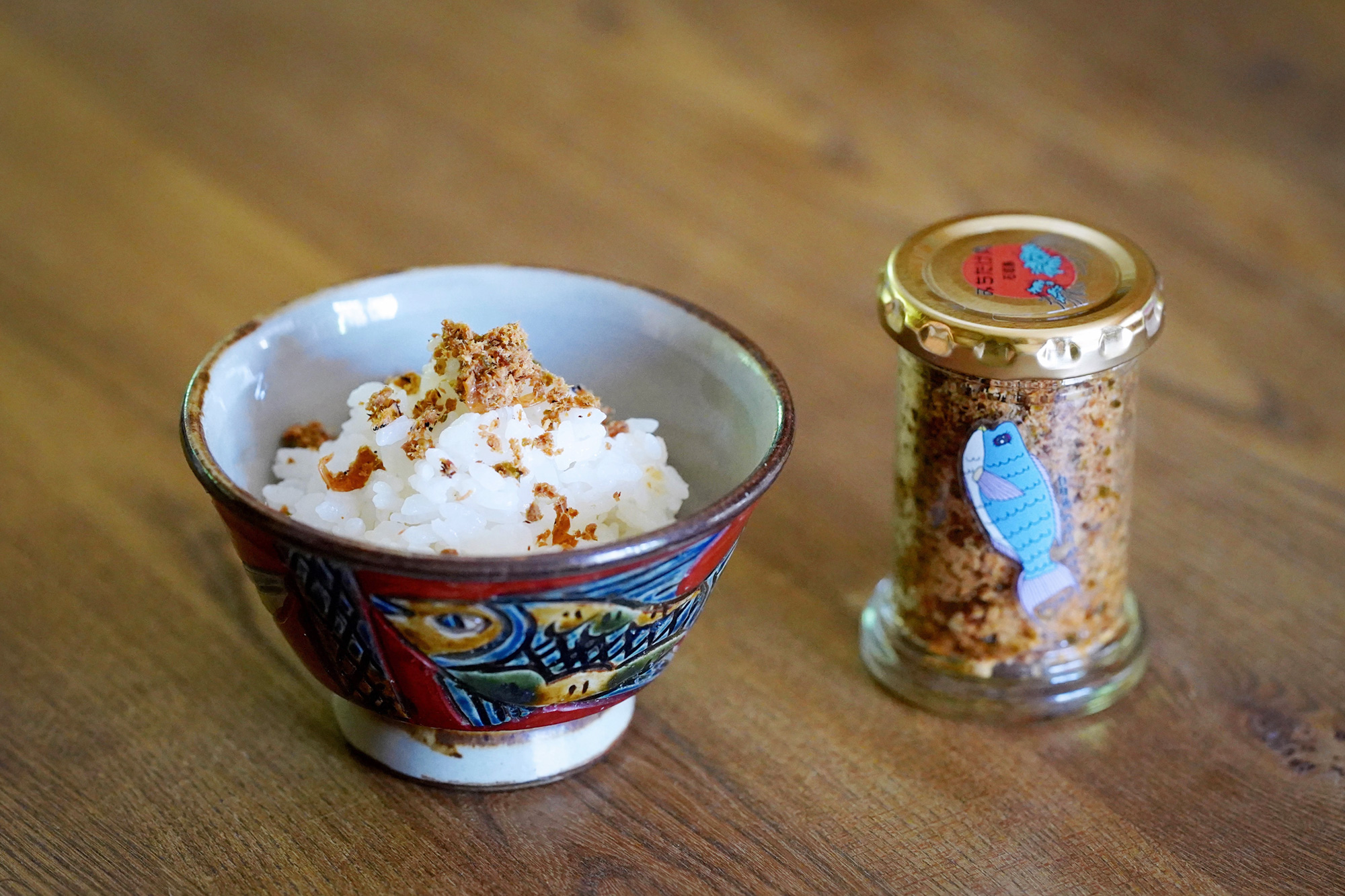
White fish furikake (rice seasoning)
Fish caught by "Michitake Maru" are transformed into delicious processed products without waste, such as "tsukudani" (simmered food), "furikake" (rice seasoning), "chili oil," "olive oil preserves," and "delicious dashi stock base" using tuna and white fish.
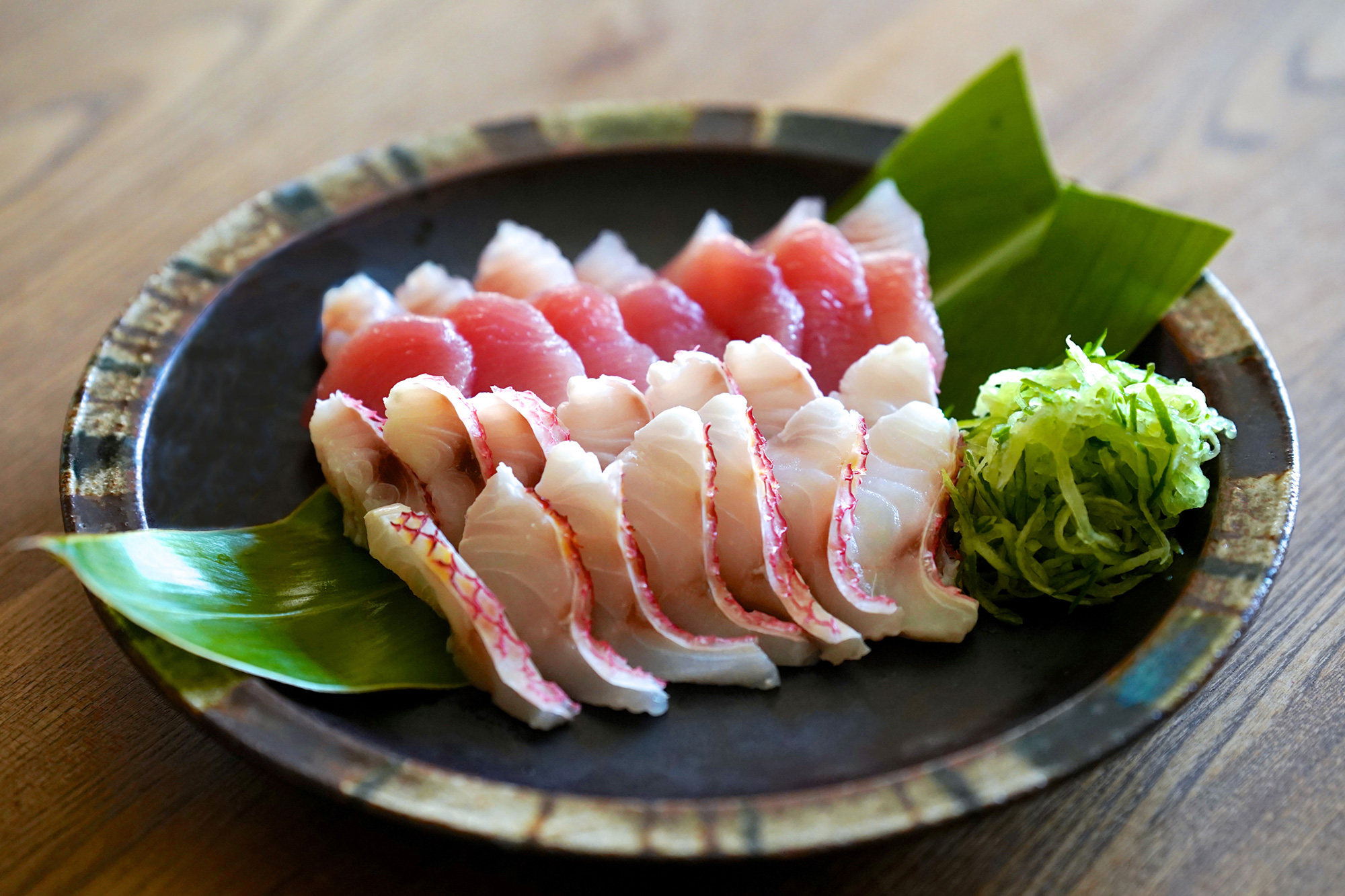
Sashimi
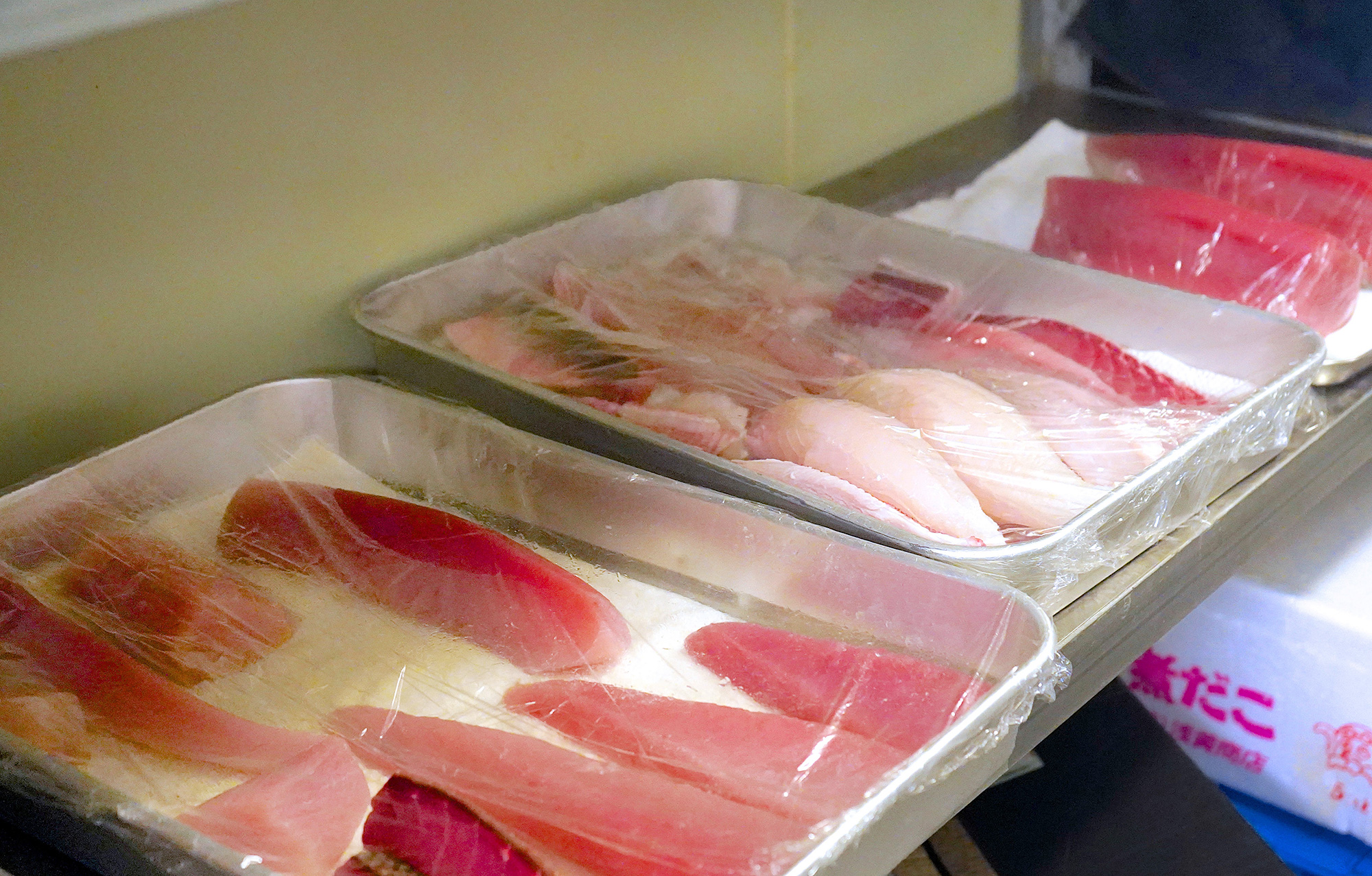
While it's generally said that sashimi tastes best immediately after being caught, just like beef for steak, fish can actually be aged under proper management to increase its umami components such as amino acids, making it even more delicious.
Future goals
"Currently, we mainly develop and sell processed food products using fish, but in the future, we would like to focus on developing cosmetic products using ingredients such as cod liver oil, based on the theme of 'becoming beautiful from the inside and out.'"
profile
Sayaka Nakajima
Born on May 6, 1983, at 8:04 AM, in Ishigaki Island, as the eldest daughter of the fourth generation of fishermen.
In 2013, I established a company to handle the fish from Michitakemaru.
The pandemic prompted us to focus not only on fresh fish but also on processed products.
I want to continue being involved in coral farming and protecting the marine environment while also enjoying its bounty.