






Oritoori - Ishigaki City Official Tourism Information Website
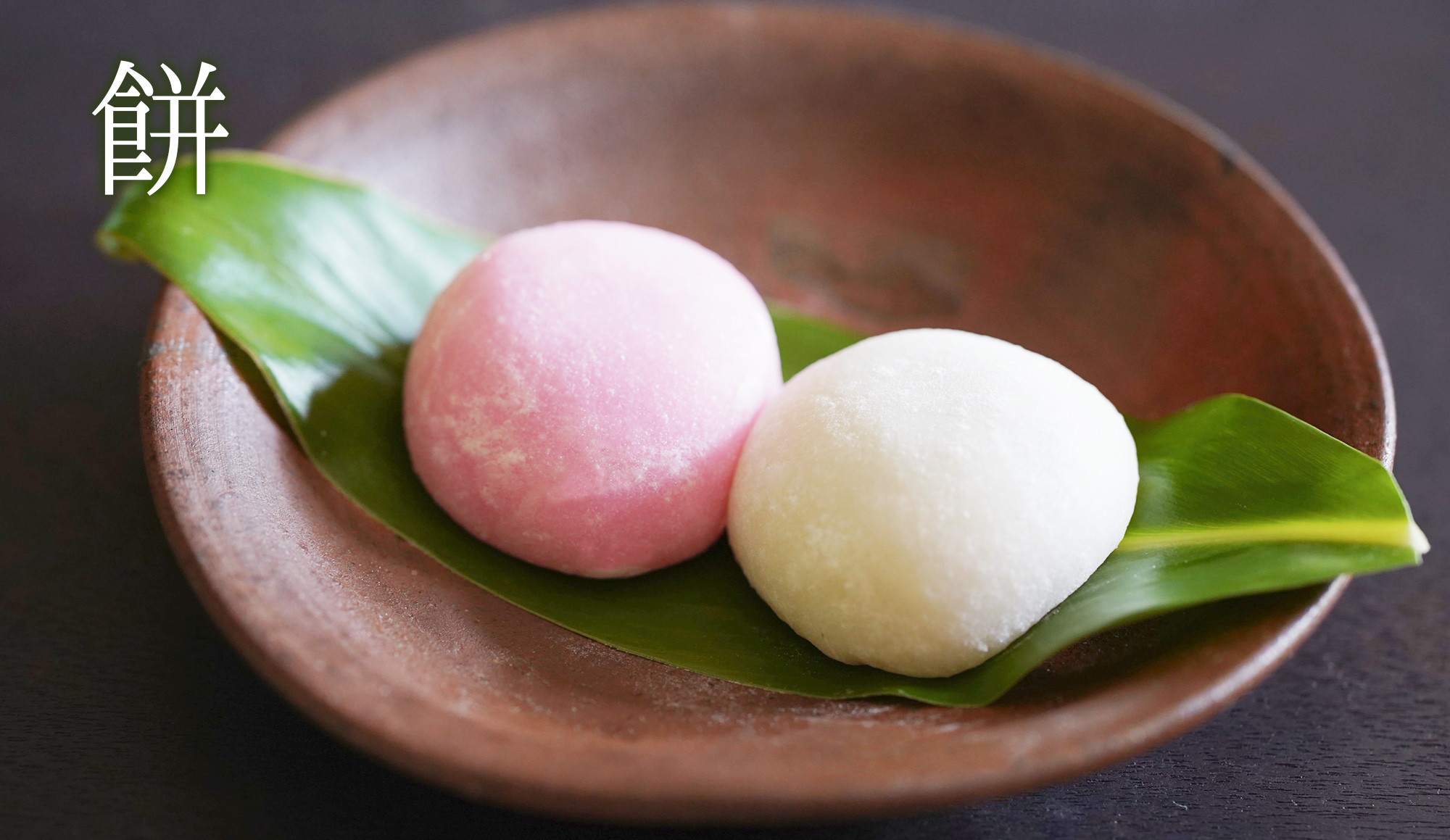
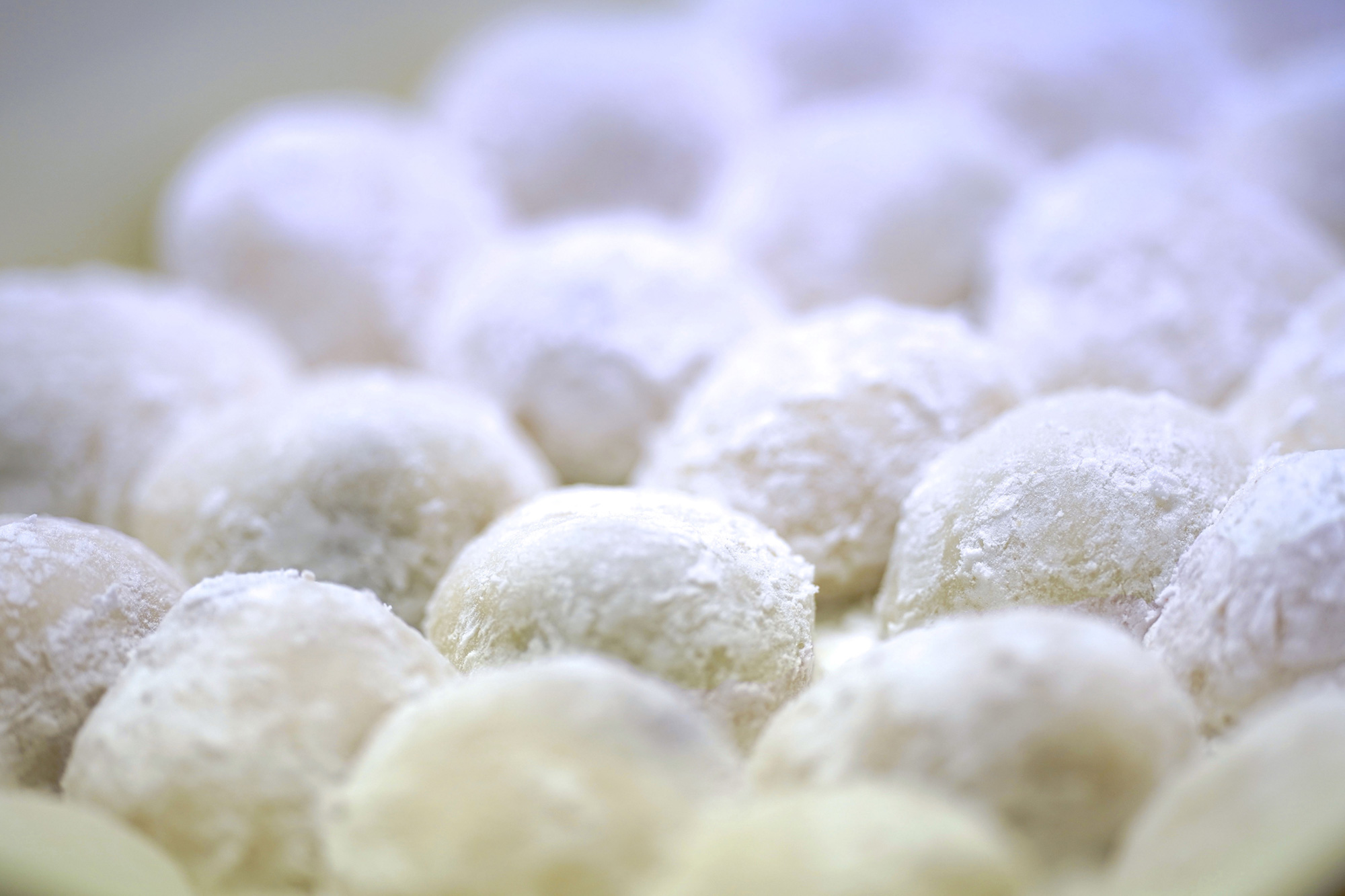
In Ishigaki Island, where annual events aligned with the lunar calendar are carefully preserved, mochi (rice cakes) are an indispensable part of offerings and other celebrations. In addition to the Obon festival and the Lunar New Year, on the 8th day of the 12th lunar month, they eat "Moochi," which is mochi flavored with brown sugar or purple sweet potato, wrapped in ginger lily leaves and steamed. On the 15th day of the 8th lunar month, known as "Jugoya," they eat "Fuchagi," which is mochi coated with boiled red beans. Used as offerings, at celebrations, and in return for such gifts, mochi continues to be loved by the islanders, retaining its traditional flavor.
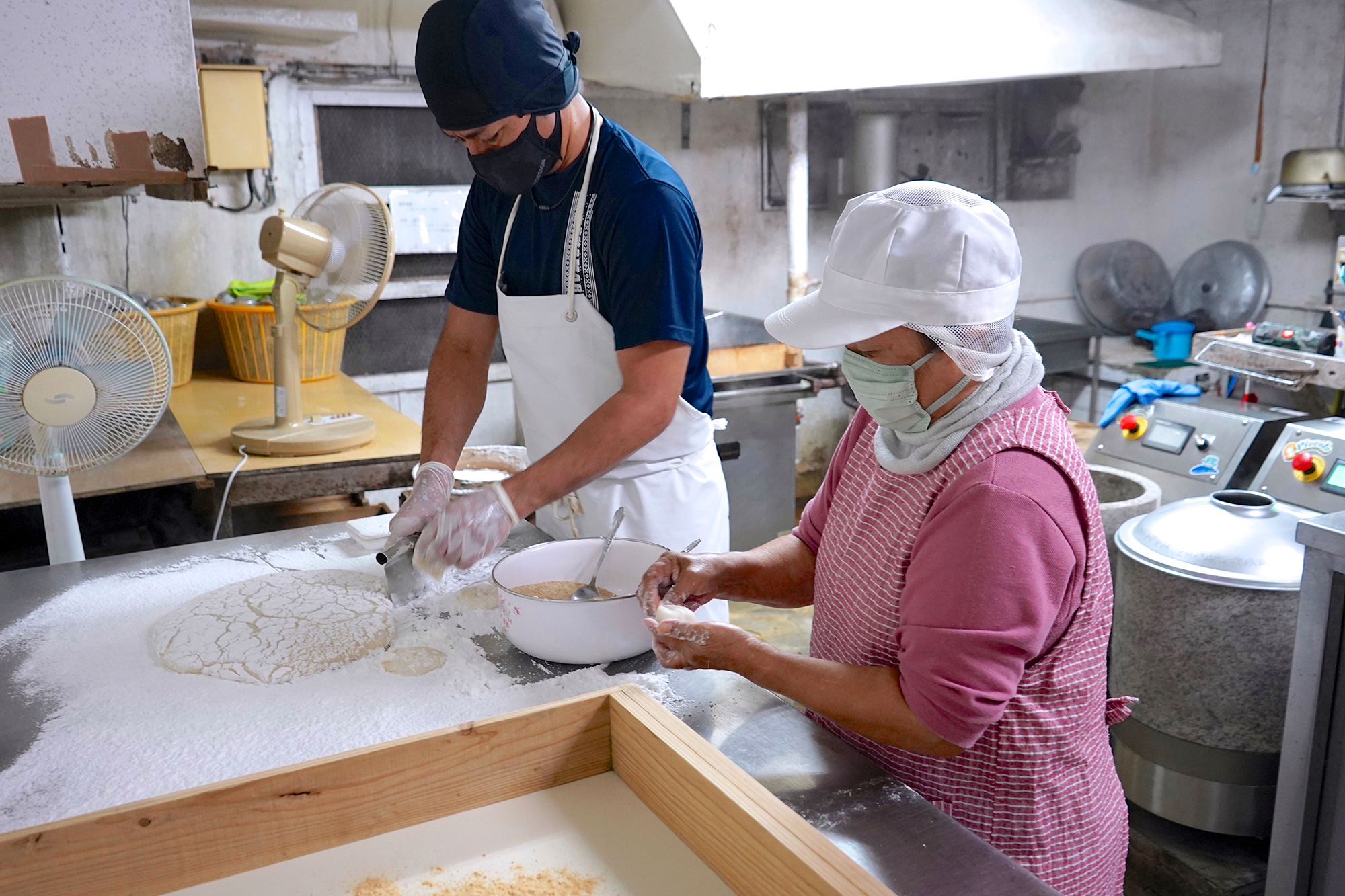
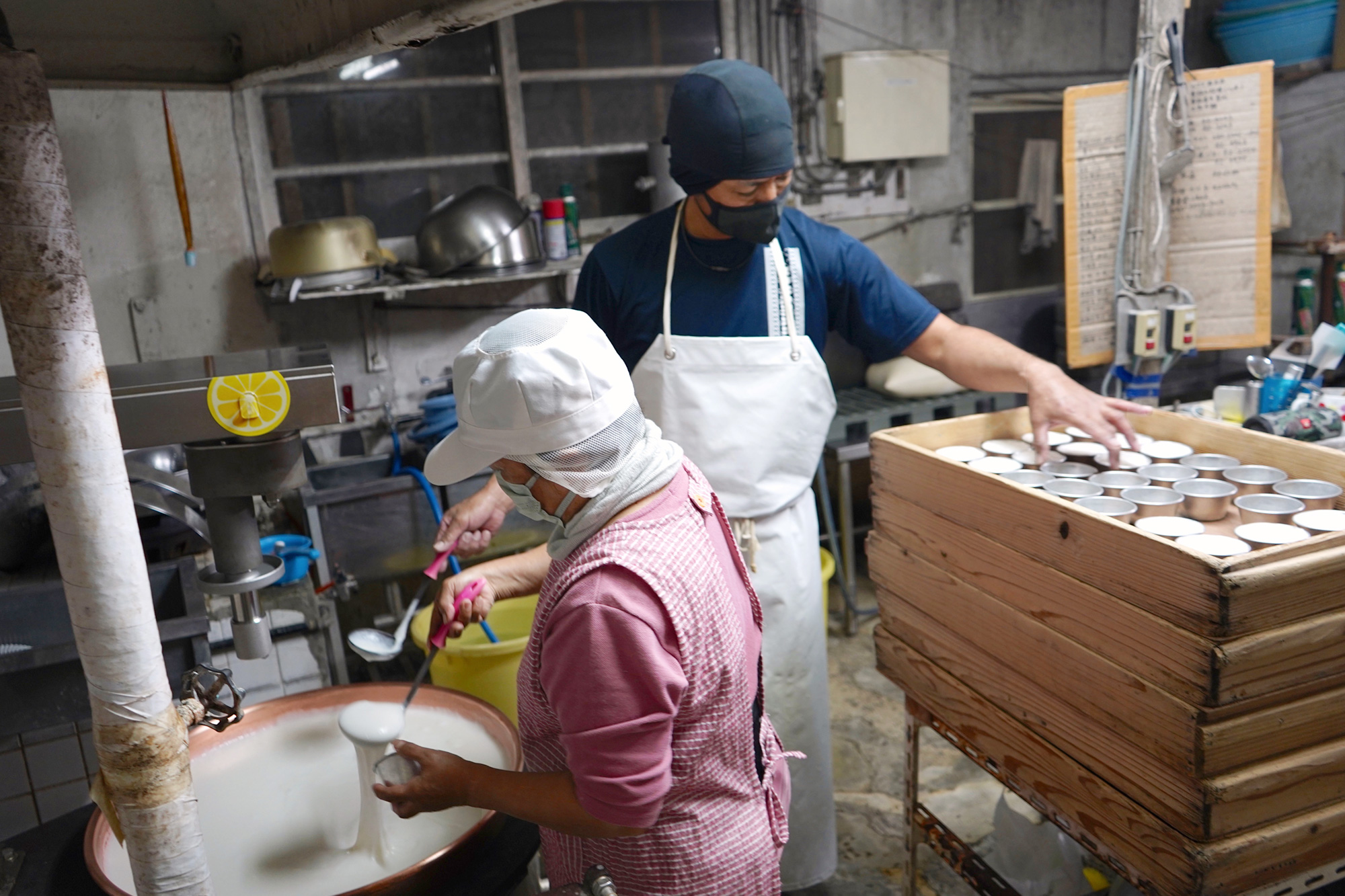
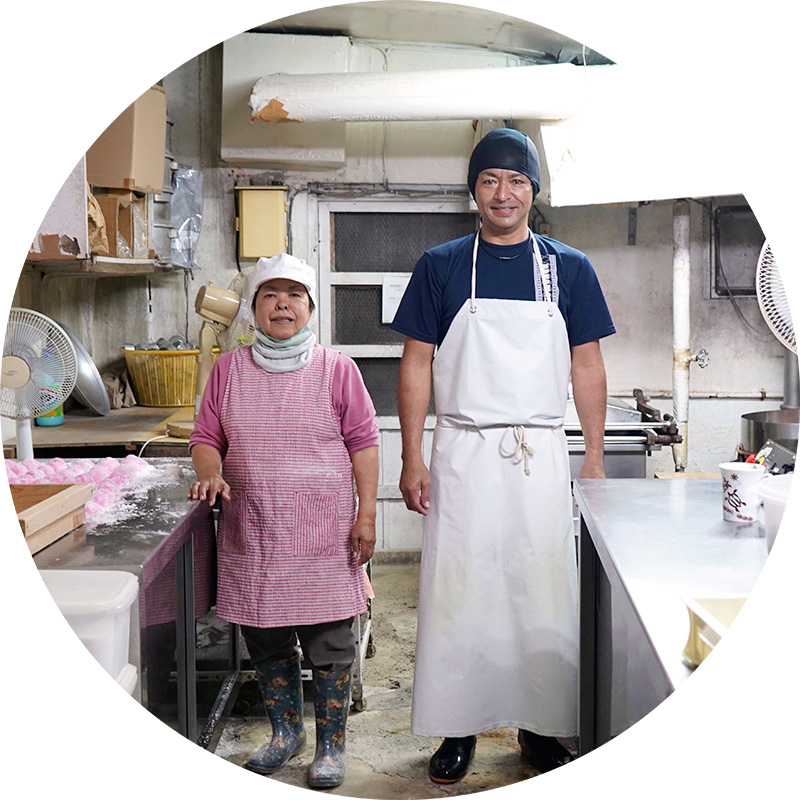
At Tamaki Mochiya, a shop that has been in business for 60 years, mochi making begins at 3 a.m., in the pitch black before sunrise. Tsuruko Kadekawa and her son Kiyoshi Kadekawa carefully handcraft mochi, as well as jimami tofu and mochi, using traditional methods.
After Tsuruko's eldest daughter married and moved to Naha, she considered closing the mochi shop that she had inherited from her predecessor. Kiyoshi was running a building waterproofing and painting business, but he decided that he couldn't let the mochi shop, which had been in his grandmother's possession for generations, disappear, so he decided to take over Tamashiro Mochi Shop while continuing his own business.
Kiyoshi works with Tsuruko at the mochi shop every morning from 3 a.m. until around 11 a.m., and then heads to his company.
"When I took over Tamaki Mochi Shop six years ago, I hadn't grasped the procedures yet, so I used to come to the factory much earlier to work. Now, I've memorized the procedures, eliminated waste, and become more efficient, so I can start at 3 pm."
Tsuruko and Kiyoshi work briskly and efficiently, their movements free of hesitation or wasted effort. They work perfectly in sync, and the tasks progress smoothly from one to the next.
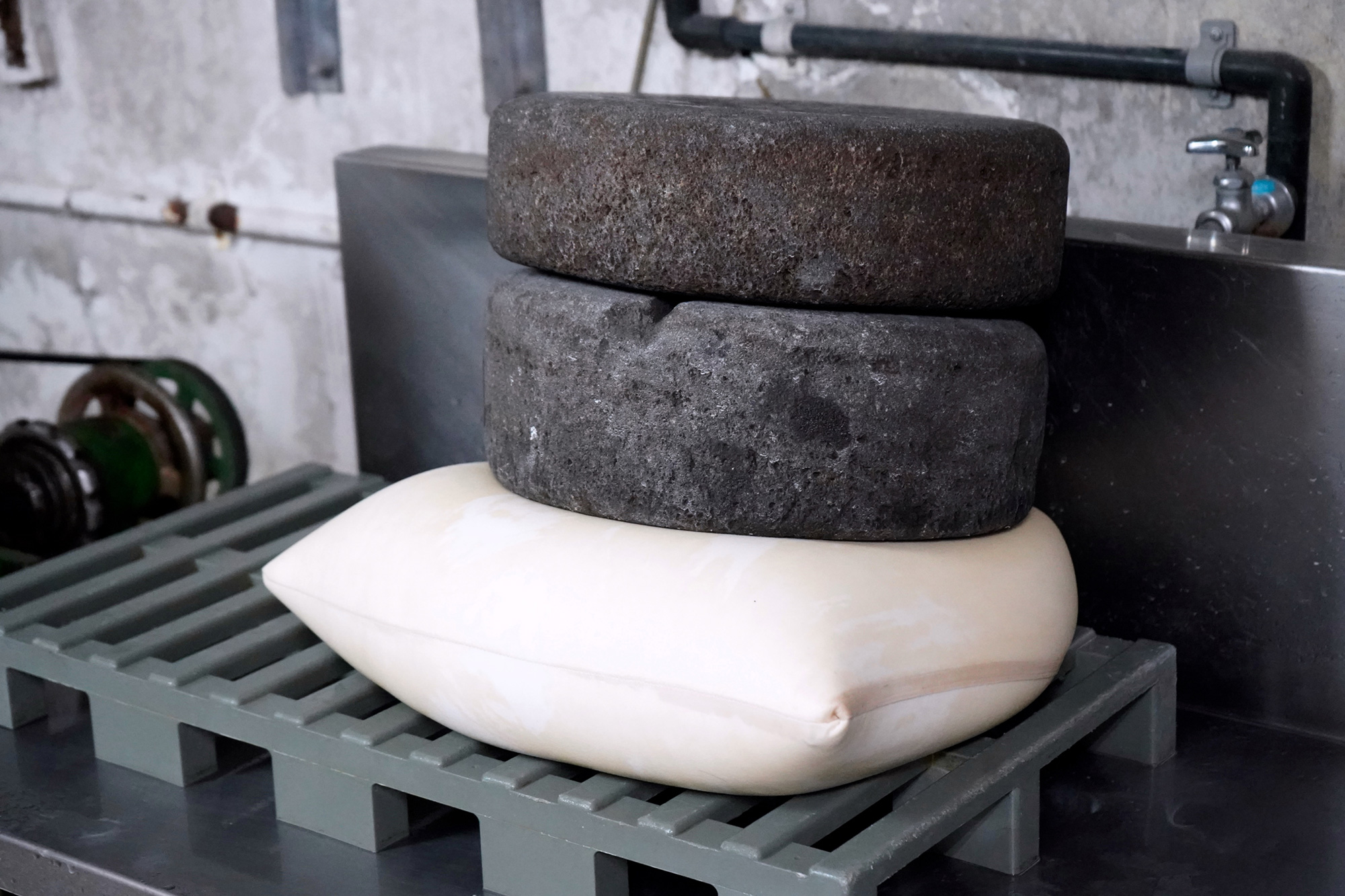
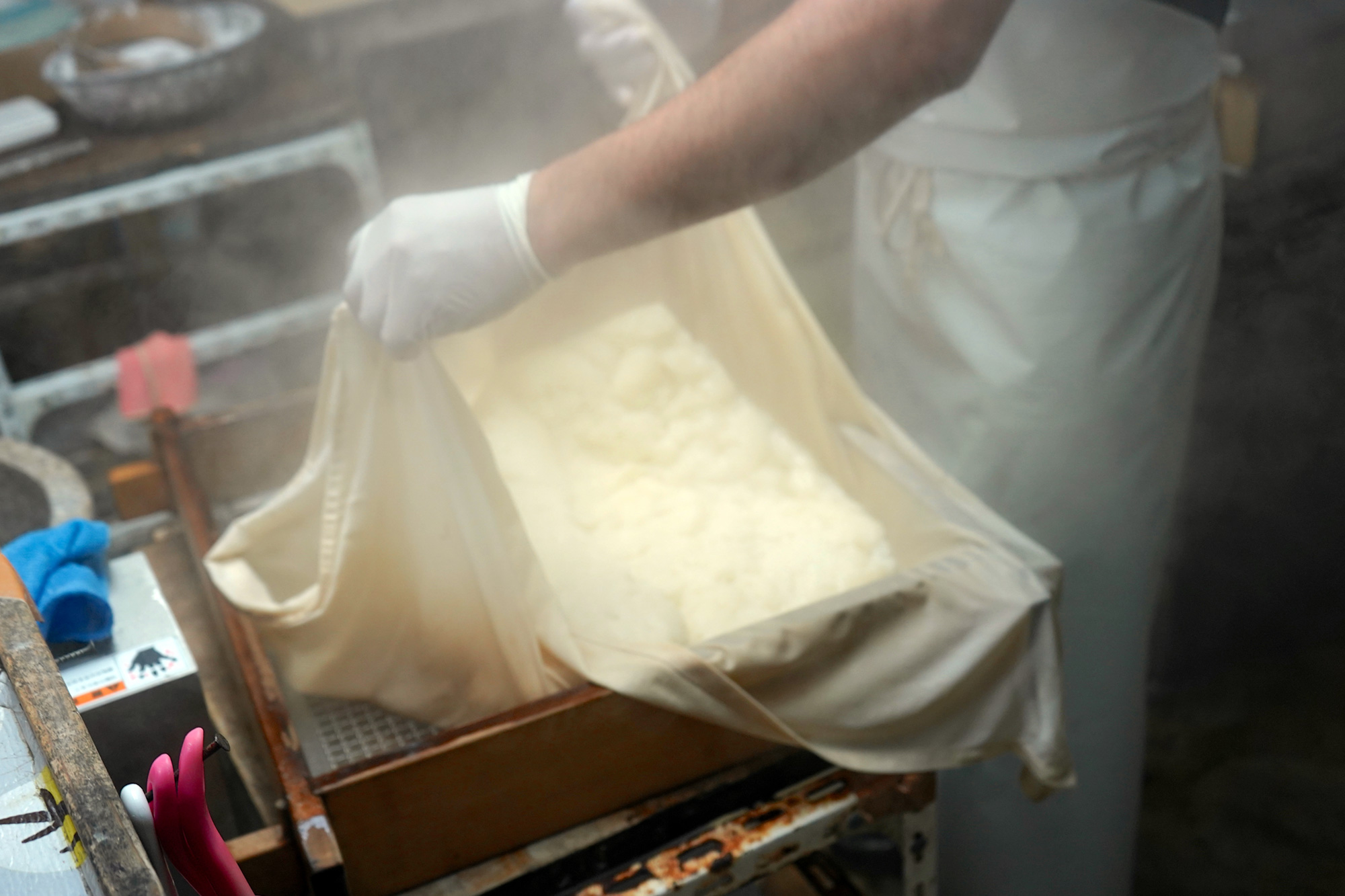
The glutinous rice used as the raw material is soaked in water, then finely crushed in a grinder. The crushed glutinous rice is placed in a cloth bag, and a weight is placed on top to drain the water.
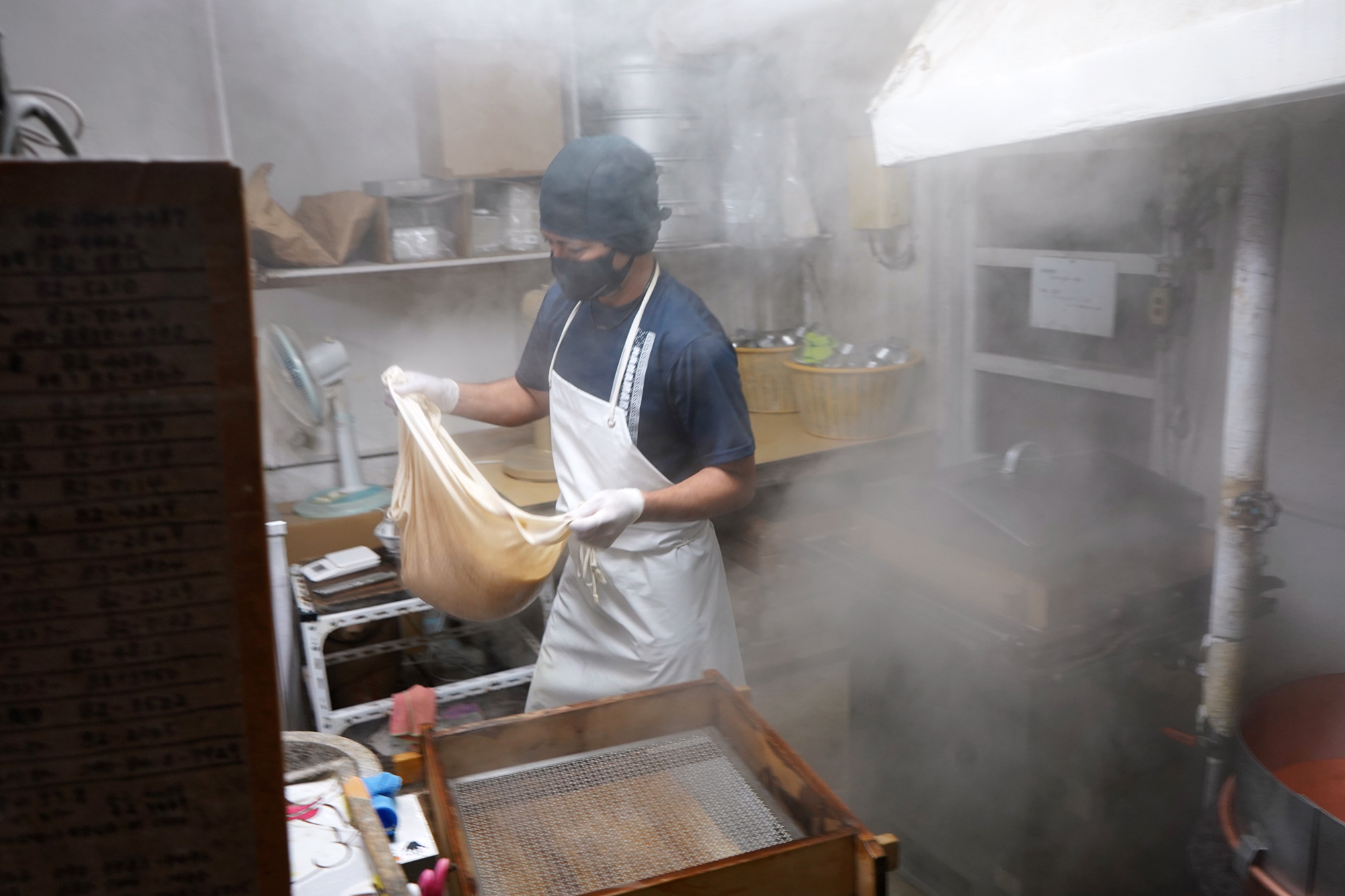
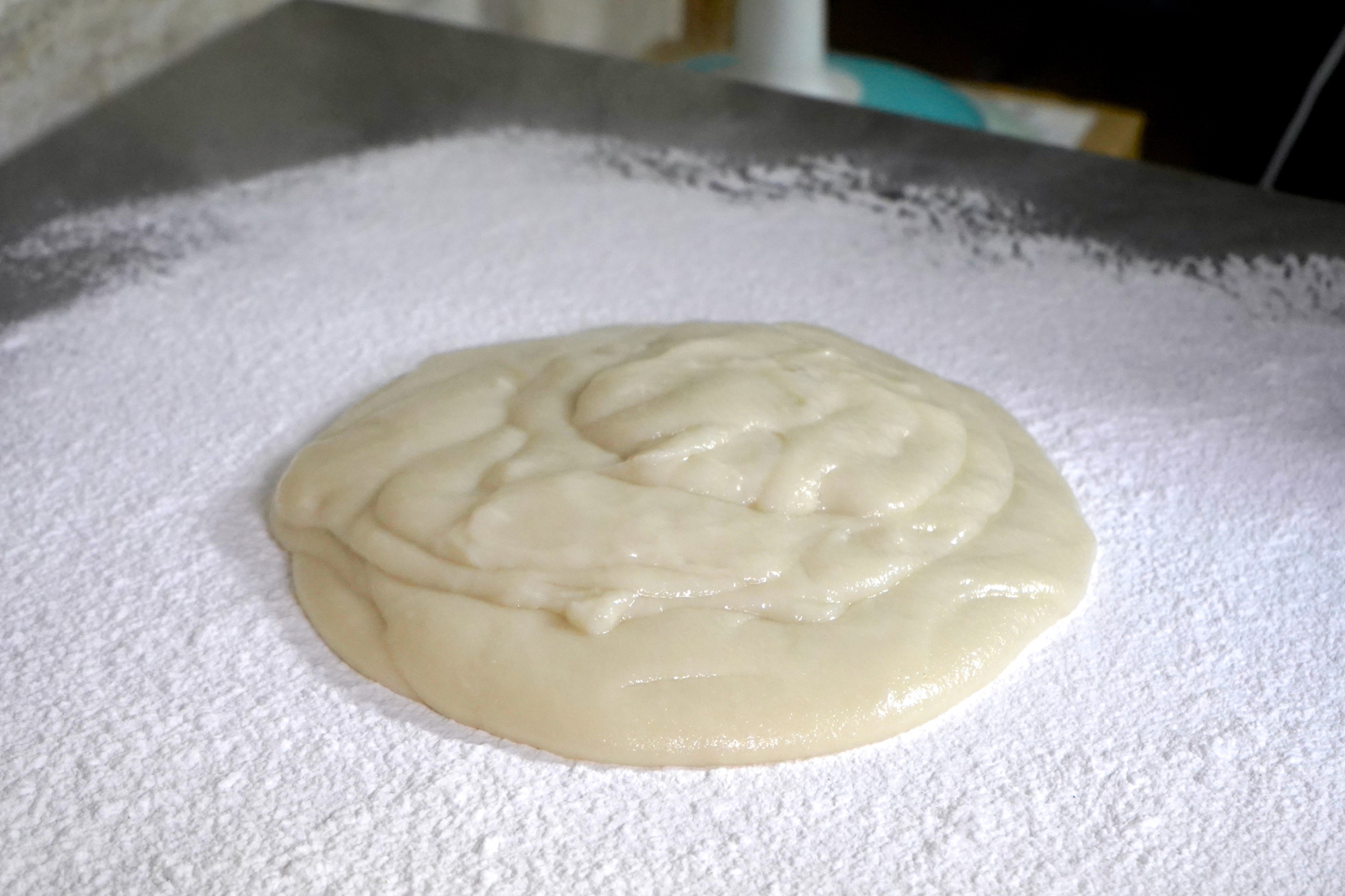
The glutinous rice is kneaded in a kneading machine, then steamed in a steamer, and finally kneaded in a mochi-making machine to complete the process.
Tamaki Mochi Shop uses raw glutinous rice instead of glutinous rice flour. Using raw glutinous rice increases the amount of work involved, but this extra effort is said to be the secret to making soft and delicious mochi. Apparently, factories that use such a labor-intensive method are rare not only on Ishigaki Island but also throughout Okinawa Prefecture.
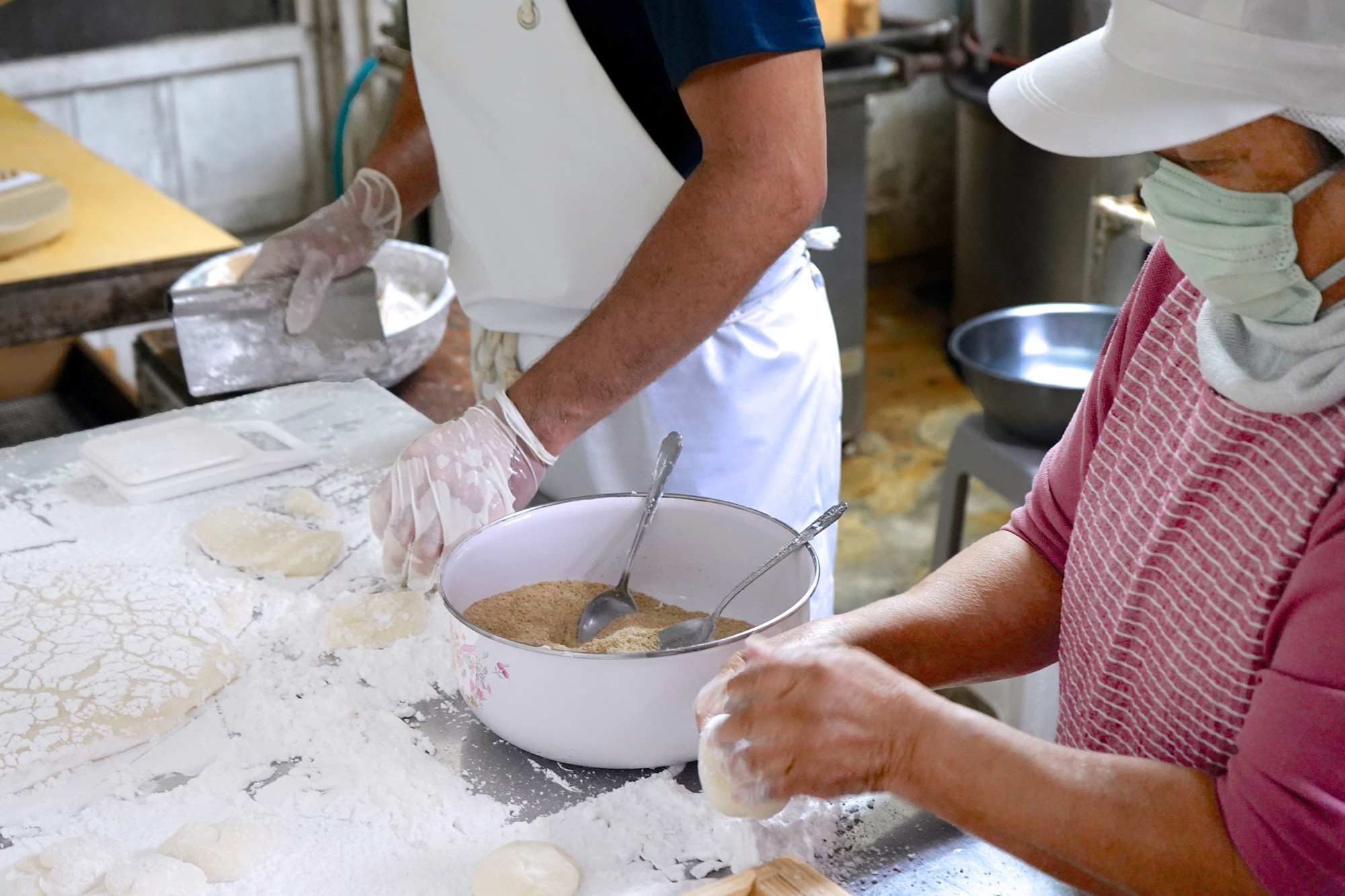
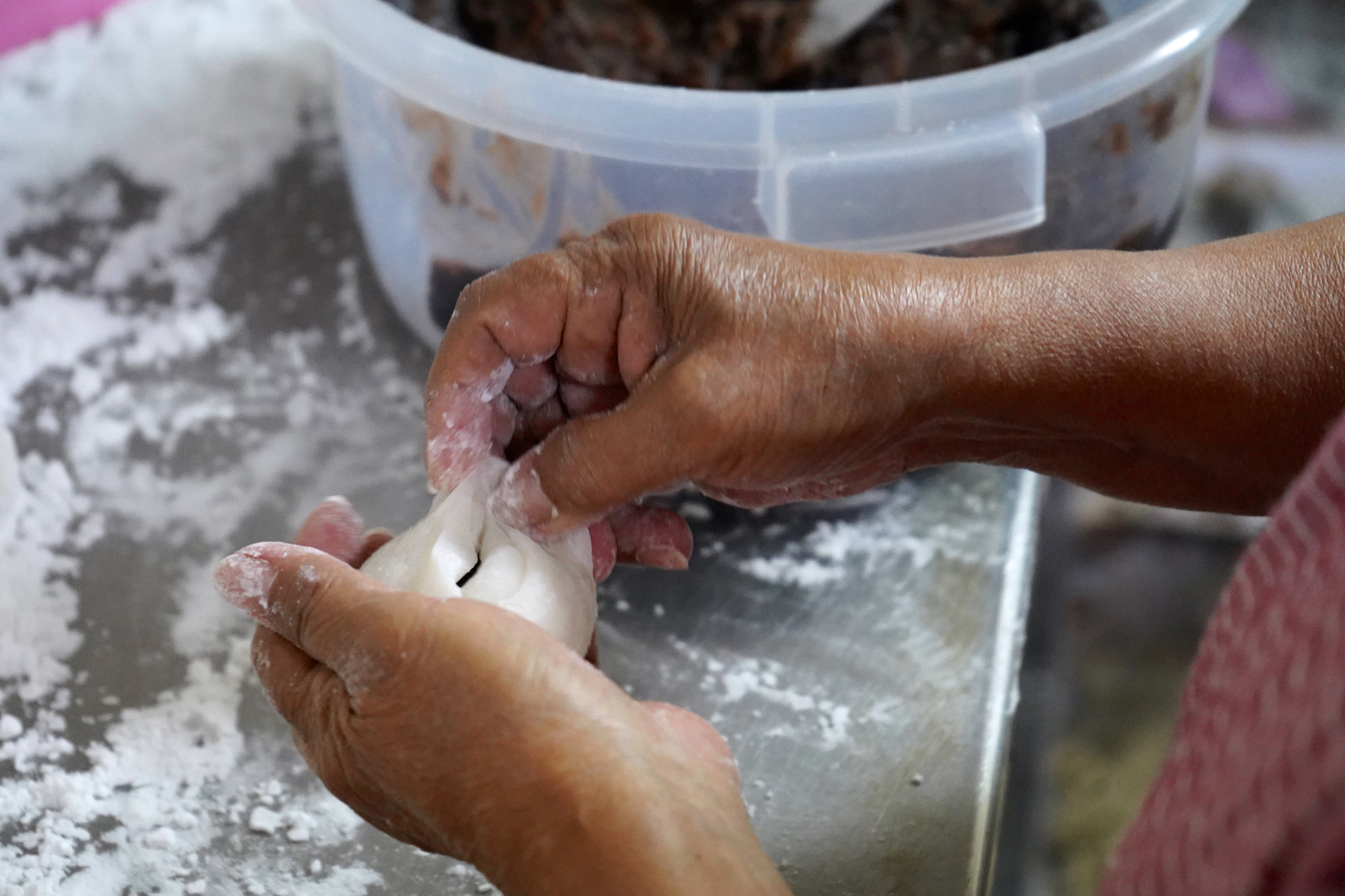
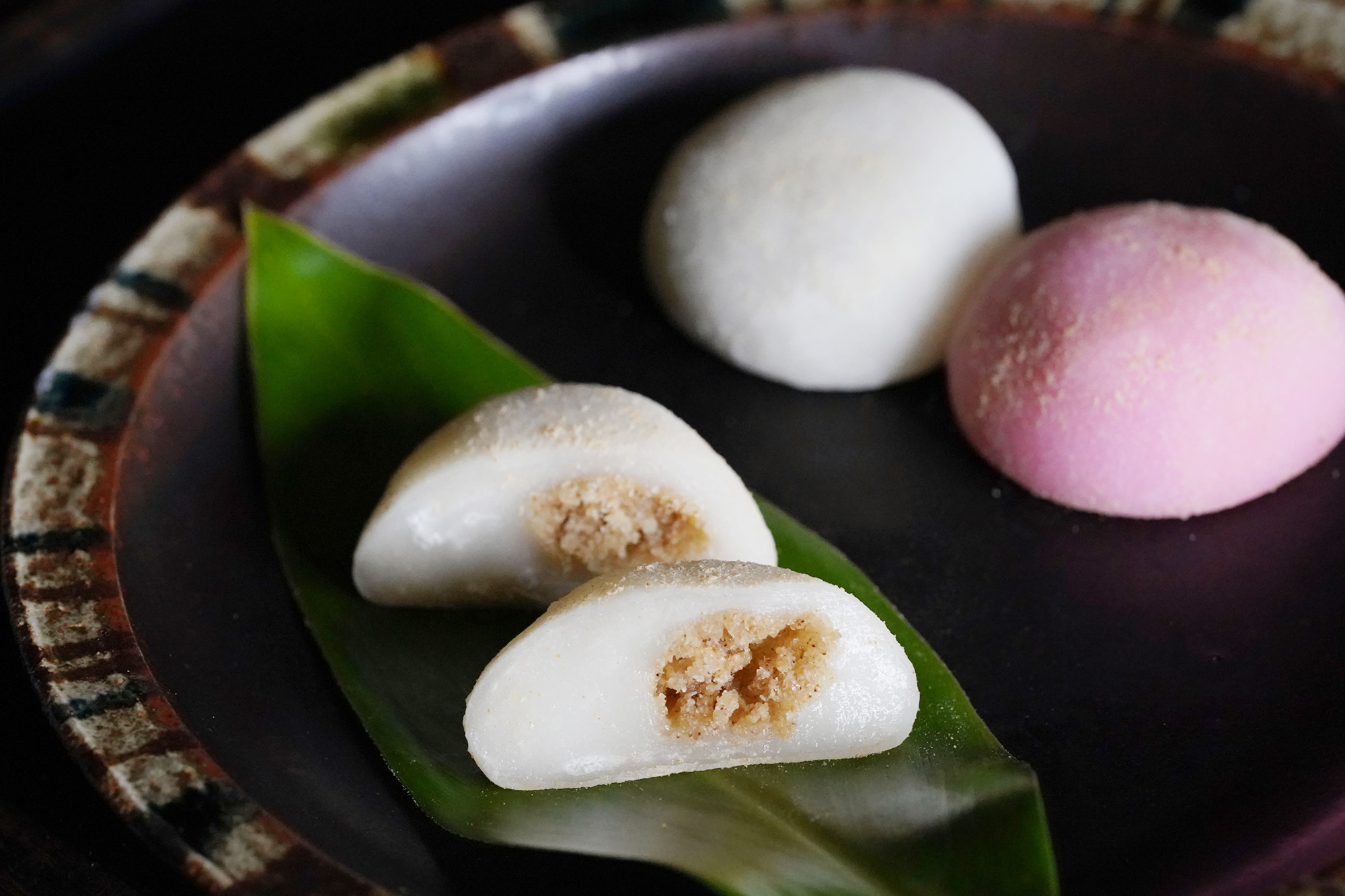
Each one is filled with red bean paste or ground sesame paste and rolled into a ball.
Once the mochi making is finished, Kiyoshi immediately begins preparing the jimami tofu without taking a break.
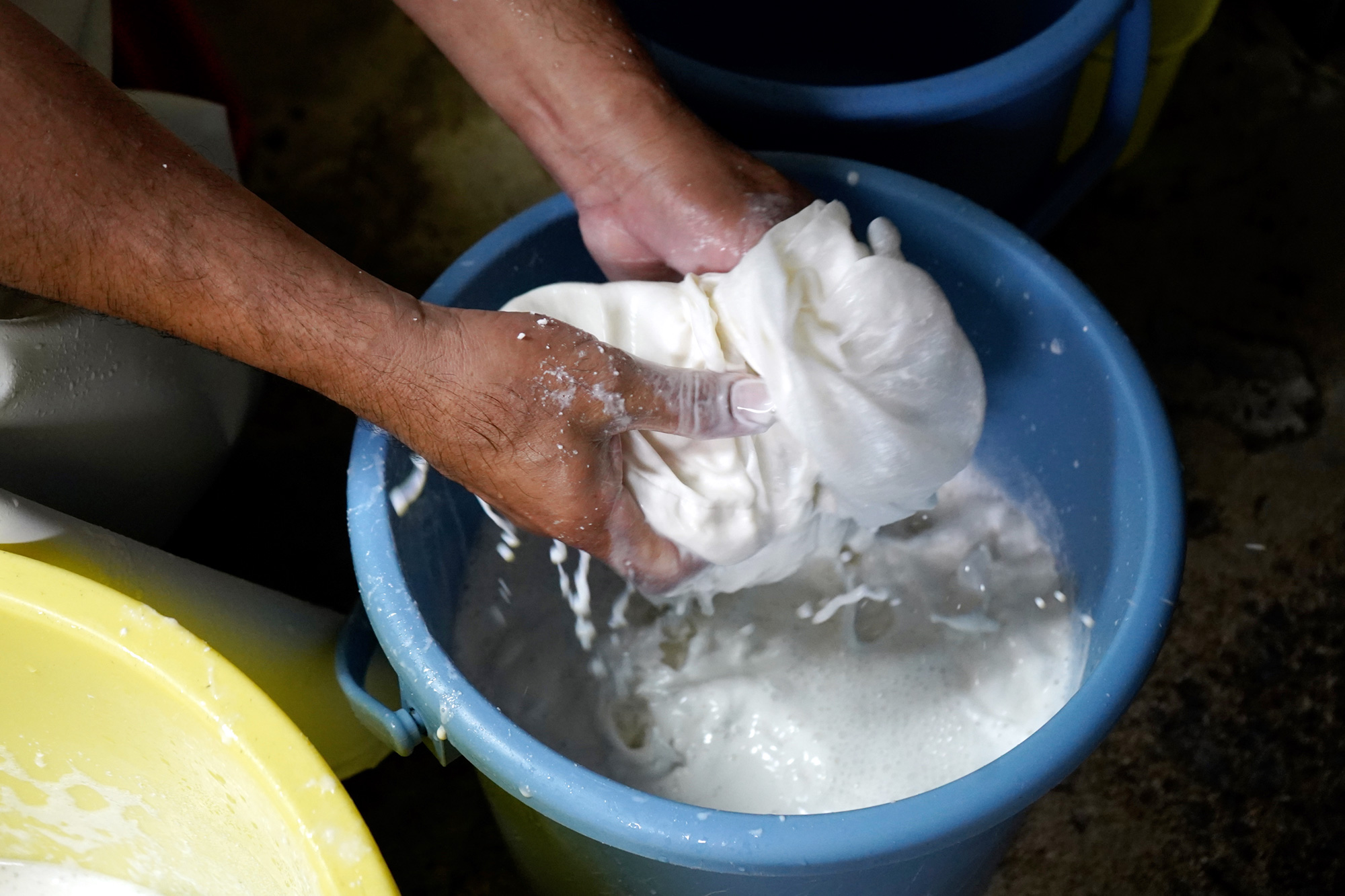
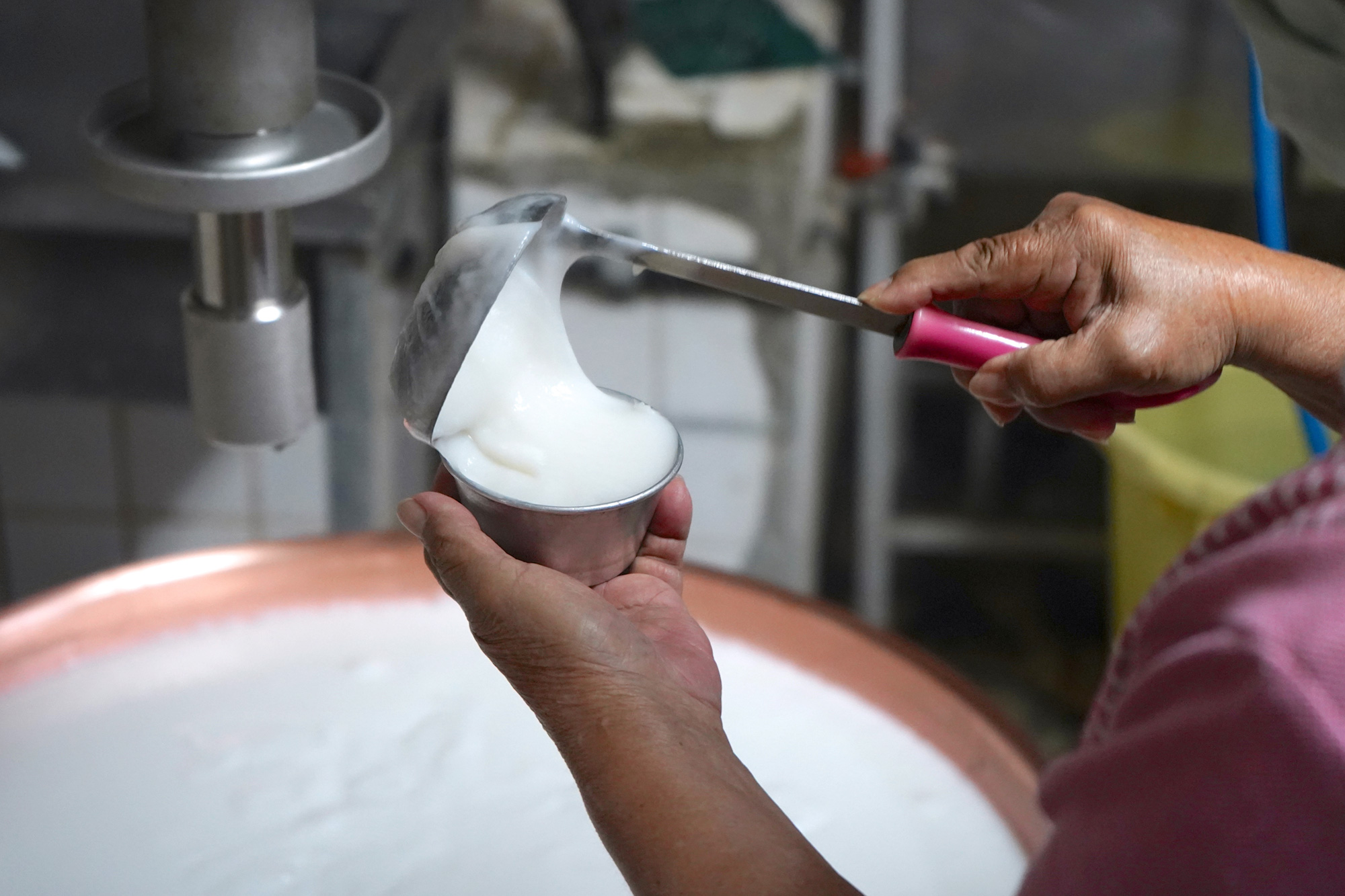
The peanut extract is squeezed out, mixed with kudzu starch, and kneaded thoroughly while being heated until it reaches the right consistency. Then, it is poured into molds one by one. This entire process is also done by hand.
Mochi filled with ground sesame seeds is a traditional, gently flavored mochi that can only be found on Ishigaki Island in Okinawa Prefecture.
"Our future goal is to expand the company. If we can enlarge the factory and introduce more machinery, we can increase production volume. We also aim to sell our products in packages that have a longer shelf life."
profile
Kiyoshi Kadekawa
Graduated from Ishigaki Second Junior High School
I got a job at a waterproofing and painting company.
Established in 2003 as a waterproofing and painting company (Kiyoshi Kogyo).
This year marks our 20th anniversary.
In 2017, I took over the family business, Tamaki Mochiya, juggling two roles: waterproofing and mochi making.